 In the Bible, the Valley of Baca is mentioned only once, in Psalm 84. “What joy for those whose strength comes from the Lord, who have set their minds on a pilgrimage to Jerusalem. When they walk through the Valley of Weeping, it will become a place of refreshing springs. The autumn rains will clothe it with blessings” (Psalm 84:5-6 NLT). In most translations, as in the NLT above, Baca is rendered as “weeping”. The Hebrew word baca is related to bakah. Bakah means “to weep”. Baca refers to a type of weeping tree – a tree that drips with resin or gum-like tears, such as balsam, mulberry, or aspen trees. In 2 Samuel 5:23, in the ESV, bakaim is translated as “balsam trees”. Verse six of the Psalm says those on a pilgrimage to Jerusalem walk through the Valley of Weeping. They don’t make it a permanent place to dwell. It’s a place the people of God occasionally walk through. So when we’re in that valley, we’re not to lower our shield of faith and give up. No! We’re to shout that the Valley of Baca is not where we live. We’re headed to a better place. We’re just passing through. This is similar to what David wrote in Psalm 23. In verse four, he states, “Even when your path takes me through the valley of deepest darkness, fear will never conquer me...” (TPT). David was going through. Not staying in. And David certainly knew about deep darkness. In Psalm 3:1-2 (TPT), he wrote, “Lord, I have so many enemies, so many who are against me. Listen to how they whisper their slander against me, saying: ‘Look! He’s hopeless! Even God can’t save him from this!’” Sometimes when we’re travelling through the Valley of Baca, we’ll run into naysayers who will speak unbelief and doubting to us. For certain, Satan will. He’ll whisper in our ear that God is not faithful. Our heavenly Father may have helped us in the past, but He won’t this time. The problem is too big. Like Satan did with the Israelites, he'll point out the giants and the walled cities and tell us we’re too puny. When that happens, we must not listen. We mustn’t talk the problem, but dwell on the covenant we have with God. That’s what David did. Verse 3 of Psalm 3 says, “But in the depths of my heart I truly know that you, YAHWEH, have become my Shield; You take me and surround me with yourself. Your glory covers me continually. You lift high my head” (TPT). As you read through the Psalms, you’ll notice David often began in sorrow and ended in faith and praise. In verses 6 and 7 of Psalm 6, he wrote, “I’m tired of all this-so tired. My bed has been floating forty days and nights on the flood of my tears. My mattress is soaked, soggy with tears. The sockets of my eyes are black holes; nearly blind, I squint and grope” (MSG). Then it seems to dawn on him that speaking his misery is not helping him, for he says, “Get out of here, you Devil’s crew: at last God has heard my sobs. My requests have all been granted, my prayers are answered” (verses 8-9 MSG). Going back to Psalm 84, the Valley of Baca can be a place of blessing. “When they walk through the Valley of Weeping, it will become a place of refreshing springs. The autumn rains will clothe it with blessings. They will continue to grow stronger...” (verses 6-7, NLT). Our God is the God of the valleys as well as the mountains. We must not make the mistake the Arameans made in 1 Kings 20, where they stated Israel’s God was “a god of the mountains and not...of the valleys” (verse 28). They attacked the Israelites on the plains near the city of Aphek. The Israelites were vastly outnumbered, but God gave His people a great victory, showing He is Lord, not only of the mountains, but also of the valleys. So when we’re in the Valley of Baca, we must keep marching through. We’re not to stop and set up our tent in defeat. If we’ll continue to trust God and walk in faith, He WILL bring us out the other side to a place of refreshing springs and numberless blessings. 
0 Comments
Before I get into the meat of what I want to say, I would like to talk to you about The Garden Tomb in Jerusalem, where my husband, Carey and I volunteered from October to December, 2019, as greeters, guides, and servers. The Garden Tomb, located on Conrad Schick Street in Jerusalem, contains an ancient tomb, considered by some to be the empty tomb of Jesus of Nazareth. An older tradition is that the death and resurrection of Jesus took place at a site known as the Church of the Holy Sepulchre, located in the northwest quarter of the Old City. As no one knows for sure the correct site, there are pros and cons for each location, which is not my purpose to discuss in this blog. Adjacent to The Garden Tomb is a rocky knoll with a skull-like appearance, known as Skull Hill. Some Christian scholars in the mid-nineteenth century proposed that Skull Hill is Golgotha. The Garden Tomb is a non-denominational charitable trust based in the United Kingdom, known as The Garden Tomb (Jerusalem) Association. It is a member of the Evangelical Alliance of Israel and the World Evangelical Alliance. The Association does not claim the Garden Tomb is the authentic tomb of Jesus. Instead, it emphasizes the site acts as a place for contemplation on the death and resurrection of the Saviour. As a person who has lived at the site, I can tell you it is a beautiful place with colourful flowers, olive trees, and the singing of birds. More importantly, however, than whether The Garden Tomb is the correct site of Jesus’ death and resurrection, is what Jesus accomplished when He rose from the dead. Romans 1:4 (ESV) says that Jesus Christ...”was declared to be the Son of God in power by his resurrection from the dead...” The resurrection is God’s clear signal that Jesus is His Son. Peter, at Pentecost, stated that “God raised [Jesus] from the dead, freeing him from the agony of death, because it was impossible for death to keep its hold on him” (Acts 2:24). Death lost its grip on Jesus! And death lost its grip on those of us who accept Him as our Saviour. “But Christ has indeed been raised from the dead, the firstfruits of those who have fallen asleep. For since death came through a man, the resurrection of the dead comes also through a man. For as in Adam all die, so in Christ all will be made alive” (1 Corinthians 15:20-22 NIV). The resurrection of Jesus means His sacrificial death on the cross was sufficient, and our sins can be forgiven. 1 Corinthians 15:17 says, “And if Christ has not been raised, your faith is futile; you are still in your sins”. But as we saw above in verse 20 of 1 Corinthians 15, Paul states that Christ has indeed been raised from the dead. As believers, we have been buried and raised with Jesus. “But God still loved us with such great love. He is so rich in compassion and mercy. Even when we were dead and doomed in our many sins, he united us into the very life of Christ and saved us by his wonderful grace! He raised us up with Christ the exalted One, and we ascended with him into the glorious perfection and authority of the heavenly realm, for we are now co-seated as one with Christ!” (Ephesians 2:4-6 TPT). Did you catch that? When Christ rose from the dead, we, as born-again believers, ascended with Him into the perfection and authority of the heavenly realm, co-seated as one with Christ. You can’t get any better than that! When things improve in Israel, I am slated to return to The Garden Tomb as a volunteer. I can’t wait. And whether it is the correct site of the death and resurrection of Jesus doesn’t matter. For while I am there, I will constantly be reminded of all Jesus accomplished for us when He rose from the dead.  Carey and I with friends at The Garden Tomb, 2019 We all have ideas about what love is. Oxford Languages describes love as “an intense feeling of deep affection”. Your Dictionary defines it as “a strong feeling of affection and concern toward another person, as that arising from kinship or close friendship”. The Greeks had up to eight different words for love, such as: Storge: affection; Philia or Phileo: friendship; Eros: sexual, erotic; Agape: unconditional, divine, selfless; Ludus: flirtatious, playful, casual, uncommitted; Pragma: committed, long-standing; Philautia: self-love; Mania: obsessive, possessive, addictive, dependent. The Bible describes love the following way: “Love never gives up. Love cares more for others than for self. Love doesn't want what it doesn't have. Love doesn't strut, Doesn't have a swelled head, Doesn't force itself on others, Isn't always "me first," Doesn't fly off the handle, Doesn't keep score of the sins of others, Doesn't revel when others grovel, Takes pleasure in the flowering of truth, Puts up with anything, Trusts God always, Always looks for the best, Never looks back, But keeps going to the end” (1 Corinthians 13:4-7 MSG). In our lives here on earth, as we interact with our family members and those around us, we can come to believe that love is conditional and has to be earned. Through what we’ve experienced in the past, we may accept as true that no one will ever love us unless we are perfect, that in the end, love will always walk away, and God will only love us if we do such-and-such. But God’s love for us is a commitment, an unbreakable covenant – undeserved, unconditional, and unceasing. His Word says that “...while we were wasting our lives in sin, God revealed His powerful love to us in a tangible display – the Anointed One died for us” (Romans 5:8 VOICE). “Even when we were dead and doomed in our many sins, (God) united us into the very life of Christ and saved us by his wonderful grace!” (Ephesians 2:5 TPT). God’s love can’t be earned because we already have it. And it can’t be lost because we don’t deserve it in the first place. And how much does God love us? Let the following words from the Apostle Paul sink deep into your spirit. “So now I live with the confidence that there is nothing in the universe with the power to separate us from God’s love...his love will triumph over death, life’s troubles, fallen angels, or dark rulers in the heavens...There is no power above us or beneath us- no power that could ever be found in the universe that can distance us from God’s passionate love, which is lavished upon us through our Lord Jesus, the Anointed One!” (Romans 8:38-39 TPT). Why do we struggle to accept God’s agape, unconditional, divine, selfless love? Probably because we live in a broken world that accepts conditional, inconsistent love as normal. Long-term marriage commitments are becoming fewer and farther between, and divorce is the norm. Parents give up on their children, and children abandon their parents. 1 John 4:16 says we can trust in the love God has for us because God IS love. God doesn’t have love. He is love. John 1:1 (AMPC) says, “In the beginning [before all time] was the Word (Christ), and the Word was with God, and the Word was God Himself.” Jesus is God incarnate. He is love incarnate. We can trust the love He has for us. When we first learn to float, we have two options – to struggle and have difficulty believing that the buoyancy of the water will hold us up, or to lie back and trust Archimedes’ principle – the physical law of buoyancy. Jesus said, “I’ve loved you the way my Father has loved me. Make yourselves at home in my love...” (John 15:9 MSG). God wants us to believe the love He has for us, to lie back, and rest in the loving arms of His Son, Jesus. His love will NEVER let us go.   Today, more than ever, we are surrounded with voices. Our friends, family, the news, social media, and advertisements are constantly speaking to us. I recently read that we hear approximately 30,000 words each day and between 4,000 and 10,000 commercials in a twenty-four hour period. That’s a lot of voices. At the command of His voice, God created the universe. “The unfathomable cosmos came into being at the word of the Eternal’s imagination, a solitary voice in endless darkness. The breath of His mouth whispered the sea of stars into existence” (Psalm 33:6, VOICE). “God spoke: “Light!” And light appeared” (Genesis 1:3, MSG). The words voices speak contain messages. The verses above show God created the universe with words. He communicated the Gospel through His Son, Jesus, the Word. He spoke humanity into being, made in His image. Like God, we are able to communicate through our voices – to influence what is created. “Death and life are in the power of the tongue, and they who indulge in it shall eat the fruit of it [for death or life]” (Proverbs 18:21 AMPC). Our words and the words of others carry weight and influence. With words, we can build up or tear down. We can speak hope or proclaim fear. We can give thanks or complain. In addition to voices on the outside, there are voices on the inside. They can be voices of hope, encouragement, and love, or they can be voices of fear, shame, and guilt. The question is, what voices are we listening to – the ones which tear down or the ones which build up? Which voices will we accept and believe and which ones will we reject? In simplest terms, the words of the voices we hear speak either fear (from our enemy, Satan) or faith (from our heavenly Father, God). The words that come from Satan are full of lies and murder (John 8:44), accusation (Zechariah 3:1-2), lawlessness (2 Thessalonians 2:3), and deceit (Genesis 3:1). But the voice of God through His Word tells us that as believers in Jesus, He is for us, and not against us (Romans 8:31), He loves us with an everlasting love (Jeremiah 31:3), He has poured His glorious grace upon us (Ephesians 1:6), He has blessed us with every spiritual blessing (Ephesians 1:3), He will give us His wisdom when we ask for it in faith (James 1:5), He has poured out His Holy Spirit upon us (Titus 3:6), given us His peace at all times and in every situation (2 Thessalonians 3:36), welled forth His love within our hearts (Romans 5:5), and shown us His special favour (1 Corinthians 15:10). Jesus said in John 10:27-28 (VOICE), “My sheep respond as they hear My voice; I know them intimately, and they follow Me. I give them a life that is unceasing, and death will not have the last word...” The voice of Jesus leads us to Heaven and life eternal.  We first meet Joseph, a Levite from Cyprus, in Acts 4, when he sold property he owned and gave all the money from the sale to the church. Joseph was a natural encourager. How do I know that? Because the apostles called Joseph Barnabas, which means “Son of Encouragement”.
It was Barnabas who vouched for the reality and faith of the newly converted Saul/Paul, when the Christians in Jerusalem were afraid of him. When news of the burgeoning church in Syrian Antioch reached Jerusalem, Barnabas was sent to encourage the believers to remain true to the Lord. Later, Barnabas went and found Paul in Tarsus and brought him to Antioch, where the two of them ministered to the church there “...and taught great numbers of people” (Acts 11:26 NIV). Everyone needs to be encouraged. Hebrews tells us, “Encourage each other every day – for as long as we can still say “today” – so none of you let the deceitfulness of sin harden your hearts” (Hebrews 3:13 VOICE). If we don’t encourage each other, sin’s deceitfulness will make us discouraged. “So speak encouraging words to one another. Build up hope so you’ll all be together in this, no one left out, no one left behind...” (1 Thessalonians 5:11 MSG). And what about Titus? How was he an encourager? In Paul’s second letter to the Corinthians, he wrote, “For even when we arrived in Macedonia we had a wretched time with trouble all around us – wrangling outside and anxiety within” (2 Corinthians 7:5 Phillips). Paul had battles on the outside, which struck fear on the inside. What encouraged Paul? It was the arrival of Titus. “But God, who encourages those who are discouraged, encouraged us by the arrival of Titus” (2 Corinthians 7:6 NLT). The Bible doesn’t say that Titus spoke with perfect words or delivered a divine message. What did he do? He showed up. He made himself available to God and was obedient in telling Paul about the longing and concern of the Corinthians for him. Although it wasn’t exciting or spectacular, it was exactly what Paul needed. Sometimes, to be an encourager, all it takes is to show up. And if there’s no one to encourage us, what should we do? We should do what David did – encourage ourselves in the Lord. In 1 Samuel 30, the Amalekites raided and burned Ziklag, David’s home base. They carried off all the women and children. When David and his men returned to Ziklag and found what had happened, his men talked of stoning him. “David was in serious trouble: the people were talking about stoning him to death, because all the people were in such deep grief...But David strengthened himself in Adonai his God” (1 Samuel 30:6 CJB). When there’s no one around to encourage us, we can draw on the strength of the Holy Spirit inside us, the Word of God, and prayer, to give us the courage we need to go on and keep our eyes fixed on the good plans God has for us. So as God’s children, dearly loved, let’s build ourselves up in our most holy faith (Jude 20), step up, show up, and find someone to encourage today. Adapted from Dennis Burke’s article, “The Power of Encouragement” in Believer’s Voice of Victory, May 2024.  “God is our refuge and strength, an ever-present help in trouble. Therefore we will not fear, though the earth give way and the mountains fall into the heart of the sea, though its waters roar and foam and the mountains quake with their surging” (Psalm 46:1-3 NIV). The hymn, “A Mighty Fortress is our God” by Martin Luther, is said to be a paraphrase of Psalm 46. Historians have written that the song has been sung by persecuted people going into exile and martyrs marching to their death. Psalm 46 talks about the presence of God, the provision of God, and the power of God. The Presence of God If ever there was a reason to fear, it is today. The world is topsy-turvy. Evil is good and good is evil. Wars, uprising, and anarchy threaten to undo the fabric of civilization. Yet God tells us in verses one to three of Psalm 46 that God is our refuge, our strength, present to help us in our trouble. Even if the world falls apart, we are not to fear. Why not? Because God’s Presence is unshakable and unchangeable. “Because I am the Eternal One, I never change...” (Malachi 3:6 VOICE). He is always there to be our refuge. The One who holds the universe together with the Word of His Power, is always there for us. “I lift up my eyes to the mountains—where does my help come from? My help comes from the Lord, the Maker of heaven and earth” (Psalm 121:1-2). The Provision of God “God has a constantly flowing river whose sparkling streams bring joy and delight to his people. His river flows right through the city of God Most High, into his holy dwelling places. God is in the midst of his city, secure and never shaken. At daybreak his help will be seen with the appearing of the dawn. When the nations are in uproar with their tottering kingdoms, God simply raises his voice, and the earth begins to disintegrate before him. Here he comes! The Commander! The mighty Lord of Angel Armies is on our side! The God of Jacob fights for us!” (Psalm 46:4-7 TPT). In the midst of trouble, God desires to bring provision for His people. Verse 4 talks about God’s constantly flowing river which brings joy and delight. In Revelation 22:1, the Apostle John writes, “Then the angel showed me a river of the water of life, as clear as crystal, flowing from the throne of God and of the Lamb...” (Revelation 22:1 BSB). The prophet Ezekiel wrote about water issuing below the threshold of God’s temple toward the east (Ezekiel 47:1). “Wherever the river flows, life will flourish – great schools of fish – because the river is turning the salt sea into fresh water. Where the river flows, life abounds” (Ezekiel 47:9 MSG). In John 7, we read where Jesus stood up on the most important day of the Feast of Tabernacles and said, “...’All you thirsty ones, come to me! Come to me and drink! Believe in me so that rivers of living water will burst out from within you, flowing from your innermost being, just like the Scripture says!’” (John 7:37-38 TPT). Jesus stated in John 6:35 NLT, “...’I am the bread of life. Whoever comes to me will never be hungry again. Whoever believes in me will never be thirsty.’” One of the names for God is El Shaddai – the Almighty and all-sufficient One. He is everything we need. The Power of God “Everyone look! Come and see the breathtaking wonders of our God. For he brings both ruin and revival. He’s the one who makes conflicts end throughout the earth, breaking and burning every weapon of war. Surrender your anxiety. Be still and realize that I am God. I am God above all the nations, and I am exalted throughout the whole earth. Here he stands! The Commander! The mighty Lord of Angel Armies is on our side! The God of Jacob fights for us!” (Psalm 46:8-11 TPT). Because God is the God Who is above all the nations, and exalted throughout the whole earth, and because the Lord of Angel Armies is on our side and fights for us, He tells us to surrender our anxiety to Him. That sounds like a command to me rather than a suggestion. How can we surrender our anxieties to God? By realizing how much He loves us. “Yahweh appeared of old to me, saying, ‘Yes, I have loved you with an everlasting love. Therefore I have drawn you with loving kindness’” (Jeremiah 31:3 WEB). Because of who God is, we can give all our care to Him. “...You can throw the whole weight of your anxieties upon him, for you are his personal concern” (1 Peter 5:7 Phillips). God is on our side. He fights for us. Even in a chaotic world, if we hide the truths of Psalm 46 deep in our hearts, we can be at peace. I'd like to share a new video that my friend Samantha Fury created for me. We both love the way it turned out. I gave her an idea of what I wanted to see and with her talents given to her by God she created this trailer. I hope you enjoy watching it. Buy the book here in the United States Buy it here in Canada Here is an intro. Cassie has lost everything. But God has a plan. When you're at the bottom, the only way to look is up! I recently read about starling murmurations. Masses of these birds gather together and move in one huge group across the sky. They aren’t simply flying in a flock. They make a show in the sky by twisting and turning into myriads of different shapes. I viewed a murmuration on a YouTube video and it is truly amazing to watch. Starlings are small-to medium-size birds. They have a short tail and a pointed head. Their feathers are glossy black, streaked with tinges of purple and green. One account I read stated that murmurations form when one starling copies the behaviour of its seven neighbours. Then those starlings nearby copy each of their seven neighbours, until the entire group moves as one. Often at sundown, starlings will produce a synchronized cloud of movement over their roosting site – the place where they will rest for the night. It has also been hypothesized that starlings use their dance to deter larger predators like hawks or falcons from attacking the group. When they move as one, it can confuse the predator and decrease the individual risk faced by each starling. Like the starling, we are always better when we are together, rather than alone. Ecclesiastes 4:9 (NLT) says, “Two people are better off than one, for they can help each other succeed.” Verse 10 goes on to say, “If one person falls, the other can reach out and help. But someone who falls alone is in real trouble.” One of Satan’s tactics is to isolate us and make us easy prey for him. Without the comfort and protection of others, we’re exposed and easy for him to “pick off”. I love the New Living Translation of verse 12 of Ecclesiastes 4. It says, “A person standing alone can be attacked and defeated, but two can stand back-to-back and conquer...” We need others in our lives who are willing to stand back-to-back with us when we’re in the midst of a battle. Verse 12 of Ecclesiastes 4 ends with, “...Three are even better, for a triple-braided cord is not easily broken.” With companions, we are not alone. We can give and receive help. Today, a Christian friend I hadn’t heard from for a while called me. She shared some problems she was facing and we prayed together. Then she asked me how she could lift me up in prayer. I told her and know she will be faithful in bringing my needs before the Lord. “A new command I give you: Love one another. As I have loved you, so you must love one another. By this everyone will know that you are my disciples, if you love one another” (John 13:34-35). Jesus never meant for us to slug it out alone. We are part of a body, His Body, the Body of Christ, every part supporting every other part. One other thing about a starling murmuration. Each starling instinctively follows their nearest companion. Apparently, they fly so close, that if one missed a beat, they’d suffer calamity. My closing prayer is, “Lord, help me to fly so close to You that there is no space between us. Help me to see the lost, lonely, and hurting, to reach out to them, and bring them into a community which flies together. In the precious Name of Jesus, Amen.” 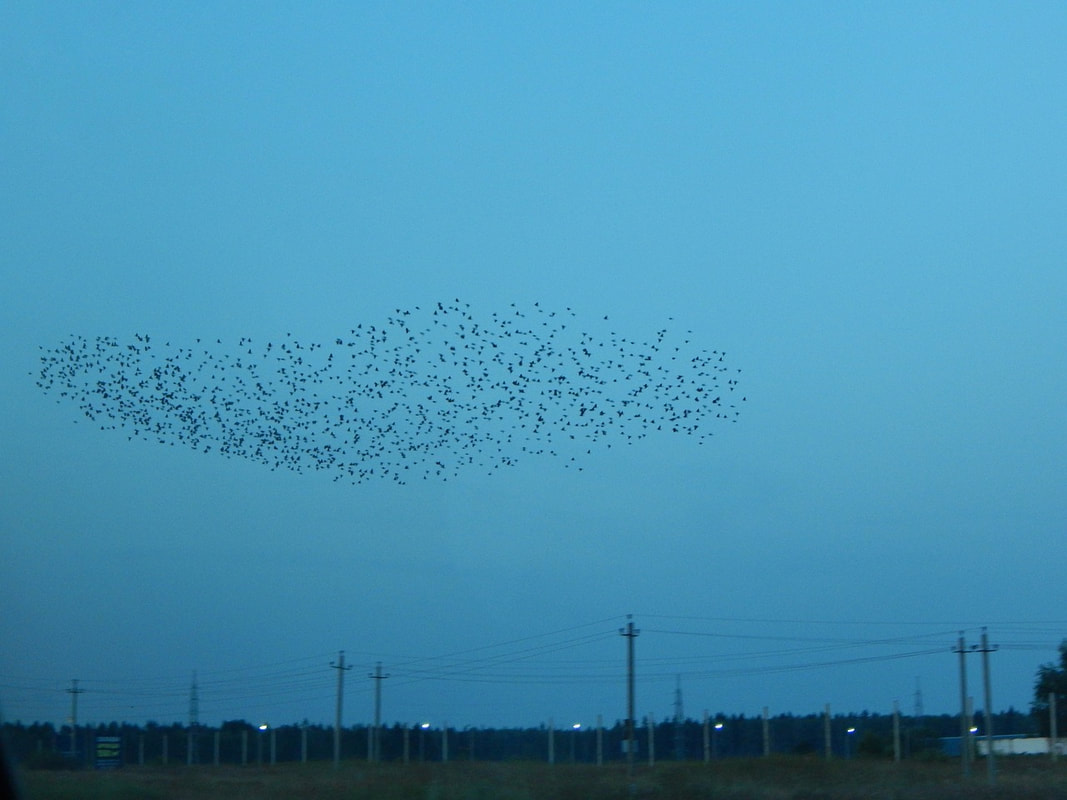  Today, I want to look in the Bible at someone who is not often studied. His name is Jehu, a commander in Israel’s army, and you can find his story in 2 Kings chapters 9-10. In 1 Kings 16:30 it says of King Ahab, a murderer and an idolater and the seventh king of the northern kingdom of Israel, that he did more evil in the sight of the Lord than all those before him. He died with Jehoshaphat, king of Judah, during a battle to recover Ramoth-Gilead from the Arameans. He was mortally wounded by an unaimed arrow. The dogs licked the blood from his chariot, as Elijah had prophesied. God used a prophet of Elisha to anoint Jehu as king of Israel. God also gave Jehu an assignment. He was to strike down the descendants of Ahab because of Ahab’s wickedness. When the prophet anointed Jehu to be king, he said the following: “... ‘Thus says the Lord, the God of Israel, I anoint you king over the people of the Lord, over Israel. And you shall strike down the house of Ahab your master, so that I may avenge on Jezebel the blood of my servants the prophets, and the blood of all the servants of the Lord. For the whole house of Ahab shall perish, and I will cut off from Ahab every male, bond or free, in Israel” (2 Kings 9: 6-8). The Bible presents Jehu as a very intense man who goes full blast in carrying out his assignment. The following verse describes the way he drives his chariot. “The watchman reported...’The driving is like the driving of Jehu the son of Nimshi, for he drives furiously’” (2 Kings 9:20, italics mine). In verse 24, Jehu draws his bow with his “full strength” and the arrow pierces the heart of the son of King Ahab, named Joram. With continued vigour, Jehu has King Ahab’s wife, Jezebel put to death and tramples her body under his horses’ hoofs. At the start of chapter 10 of 2 Kings, Jehu kills 70 sons of Ahab. So far, he has been obedient to the Lord’s command. He continues his mission, and through trickery, kills all the prophets, priests, and worshipers of Baal. “In this way, Jehu destroyed every trace of Baal worship from Israel” ( 2 Kings 10:28 NLT). Jehu does everything big. If he lived today, his motto might be, ‘Go big or go home’. BUT, the end of verse 28 of 2 Kings 10 says, “He (Jehu) did not, however, destroy the gold calves at Bethel and Dan, with which Jeroboam son of Nebat had caused Israel to sin.” Verses 31-32 of 2 Kings 10 (NLT) are telling. “But Jehu did not obey the Law of the Lord, the God of Israel, with all his heart. He refused to turn from the sins that Jeroboam had led Israel to commit. At about that time the Lord began to cut down the size of Israel’s territory” (bold print mine). Because Jehu destroyed Ahab’s family, as God told him to, God allowed him to have descendants on the throne of Israel for four generations. But because of Israel’s persistence in hanging on to idolatry, which Jehu failed to stop, God began to cut off parts of Israel, until we read about the Israelites going into exile at the end of 2 Kings. Jehu was zealous to cleanse the land of Baal worship, but he did not seek to love God with all his heart, soul, and mind as Jesus told us to do in Matthew 22:37. He was not a true worshipper of God. What lessons can we learn from Jehu’s story? There are many, but here are three.
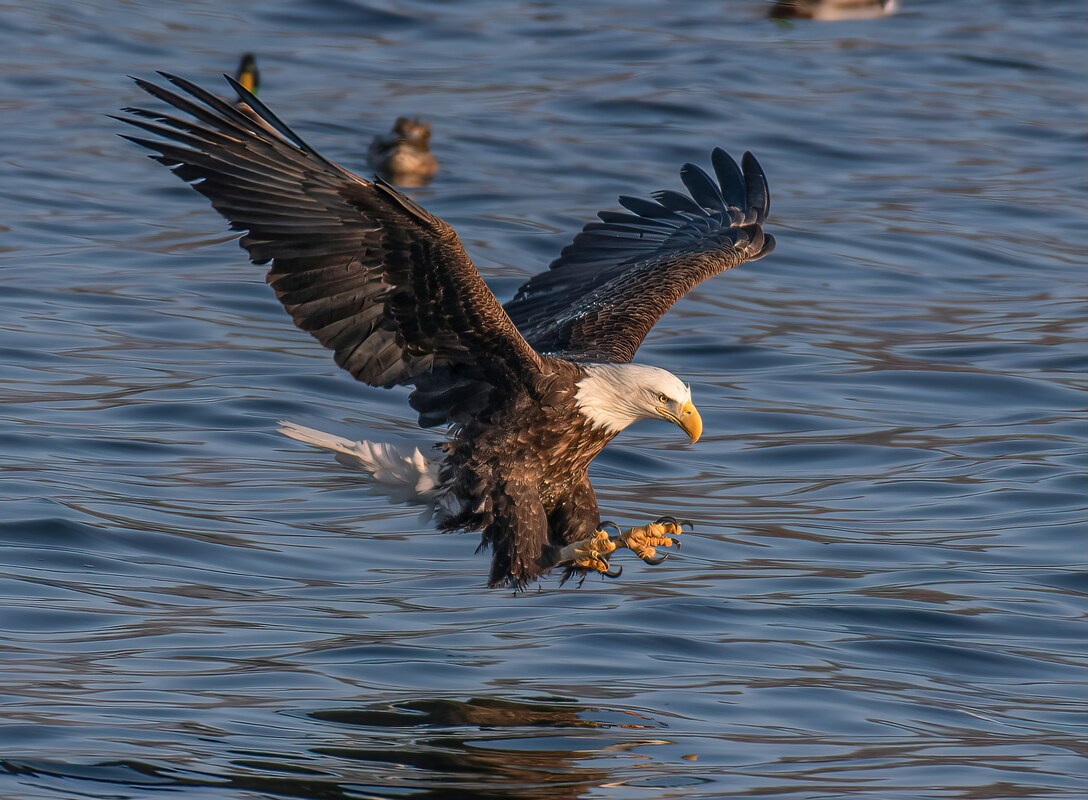 Did you know crows are called “gangsters of the sky” and that they have the audacity to attack eagles, the strongest bird of prey? Crows attack eagles, mainly to steal their food. The hunt for food takes energy; it’s much easier for the crow to steal it. The crow will also attack to protect their nests and hunting grounds.
Crows are intelligent. I read they are as smart as a seven-to-ten-year old child. When they glide, they can reach up to 70 mph. The following are some of the tactics they use to attack eagles: 1.Crows dive bomb, peck at the eagle, and tug at their feathers. They are known to land on the eagle’s back 2.Crows use their numbers to confuse their victims, so their prey has to fight on many fronts 3.Crows do something called “mobbing”. As few as three or four or as many as dozens will come at a victim with their voices. They caw and caw, intimidating the prey. They don’t stop 4.Crows tag-team. While some go off to rest and feed, others come in to continue the fight. The crows get a rest, while the prey doesn’t So what does the eagle do when attacked by crows? It flies higher. An eagle can fly comfortably at 10,000 feet, while a crow’s maximum is 7,000 feet. Higher than 7,000 feet, the crow gets dizzy and faints. They don’t have the lung capacity to fly at the higher heights. When I read about the tactics crows use, they reminded me of Satan’s strategies. John 10:10 (VOICE), says, “The thief approaches with malicious intent, looking to steal, slaugher, and destroy...” Satan stands ready to steal the blessings God has pledged to us by whispering lies into our ears and making us doubt God’s goodness and promises. And if we as believers bring light into his territory of darkness, he will attack. Like a tag team, he and his demons will wear us down with their constant voices of negativity, doubt, and accusation. He will ruffle our feathers, peck, and dive-bomb us and bring pressures from all sides, whether it be in our finances, health, or relationships. He and his devils will mob us with their voices, telling us we are fools for believing God. So...what should we do? Do like the eagle does – fly higher and look heavenward. Dwell on God and on His promises. In Christ, we are more than conquerors (Romans 8:37). In Him, we can do all things (Philippians 4:13). God always leads us in triumphal procession – not sometimes, but always (2 Corinthians 2:14). If we’ve been born of God, we are world overcomers (1 John 5:14). The God in us is greater than the god of this world (1 John 4:4). Jesus disarmed the rulers of darkness and authorities and put them to open shame (Colossians 2:15). Jesus has given us all power over the enemy (Luke 10:19). I could go on, but I think you get my drift. When under attack, praise the Lord. Psalm 22:3 says that God inhabits the praises of His people. Praise and worship break bonds. Remember Paul and Silas in jail (Acts 16:24-26). When Jehoshaphat and the Israelites praised the Lord, God fought their battle (2 Chronicles 20:19-22). The walls of Jericho tumbled when Joshua and the people shouted and blew trumpets (Joshua 6:20). Change what you’re looking at. “I will lift up mine eyes unto the hills, from whence cometh my help. My help cometh from the Lord, which made heaven and earth” (Psalm 121:1-2). Lift up your eyes to the Creator of heaven and earth. The closer we get to God, the more jittery the enemy becomes. In God’s presence, the air is thin and Satan can’t breathe well. Praise the Lord for His might, His goodness, His faithfulness, His kindness and goodwill toward us, His unchangeableness, His wisdom, His love. When we choose to turn away from the attack of the enemy and focus on God, we submit to God. “So submit yourselves to the one true God and fight against the devil and his schemes. If you do, he will run away in failure” (James 4:7 VOICE). Be like the eagle, fly high, and see the devil run, his tail tucked between his legs. |
AuthorIn this Blog, I want to share with you some of the things I've learned from many years of following Jesus. Archives
April 2024
Categories
|
 RSS Feed
